
No doubt you’ve heard of Mennonites. Perhaps also of the Amish. Maybe even the Brethren and Hutterites. All fall under the heading of “Anabaptists,” who trace their roots to 16th century Germany and Switzerland. Their predecessors were part of what is known as the Radical Reformation, a response to perceived corruption in both Roman Catholicism and the expanding Magisterial (state-wedded) Protestant movement led by Martin Luther, John Calvin, and others.
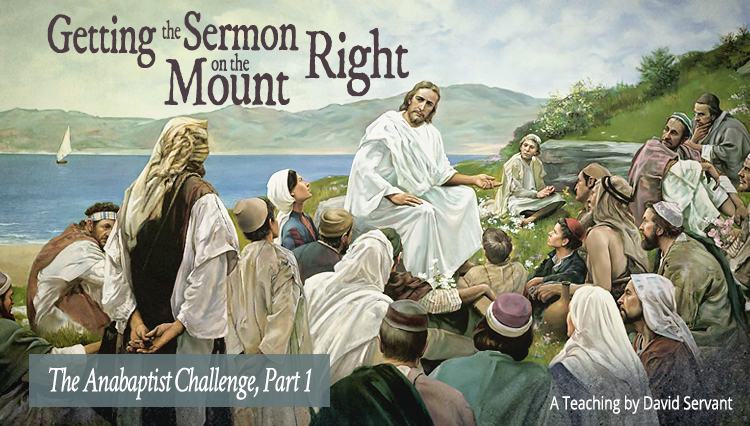
The artist who painted this picture certainly didn’t “Get the Sermon on the Mount Right,” as Jesus and His Jewish followers would have had a little darker skin!
The early Anabaptists, like the early Christians, were pejoratively named by their persecutors, but in their case because of their distinct doctrine of re-baptizing adults who had already been baptized as babies. The word anabaptist means “one who baptizes again.” Anabaptists noticed that infant baptism, practiced by both Roman Catholics and the Protestants of their day, wasn’t found in the New Testament, and that the apostles seemed to baptize only those who were old enough to understand the gospel, repent of their sins and follow Christ.